Before the First Snow: A Massachusetts Home Checklist
The winter prep that is specific to Massachusetts: CO law, parking and hydrant rules, a free Mass Save audit, outage numbers and generator rules.
Most winter checklists apply anywhere with a furnace. These are the steps that depend on being in Massachusetts: a carbon monoxide law written after a snow-blocked vent, town parking and sidewalk rules with short clocks, a no-cost energy audit, and the outage numbers you want in your phone before the lights go out.
1. Clear the vents and test the CO alarms
Massachusetts’ carbon monoxide law is called Nicole’s Law (M.G.L. c. 148, s. 26F 1/2). It requires CO detectors in most residential buildings, and it is named for 7-year-old Nicole Garofalo, who died in January 2005 when snow drifts blocked a heating vent at her house, according to the Massachusetts Trial Court Law Libraries.
After every storm, dig out the exhaust and intake vents for your furnace, boiler, water heater and dryer, especially any that sit low on the wall. Test your alarms now and replace any that are past the date stamped on the back. Your local fire department can tell you where alarms are required in your house.
2. Book a Mass Save assessment
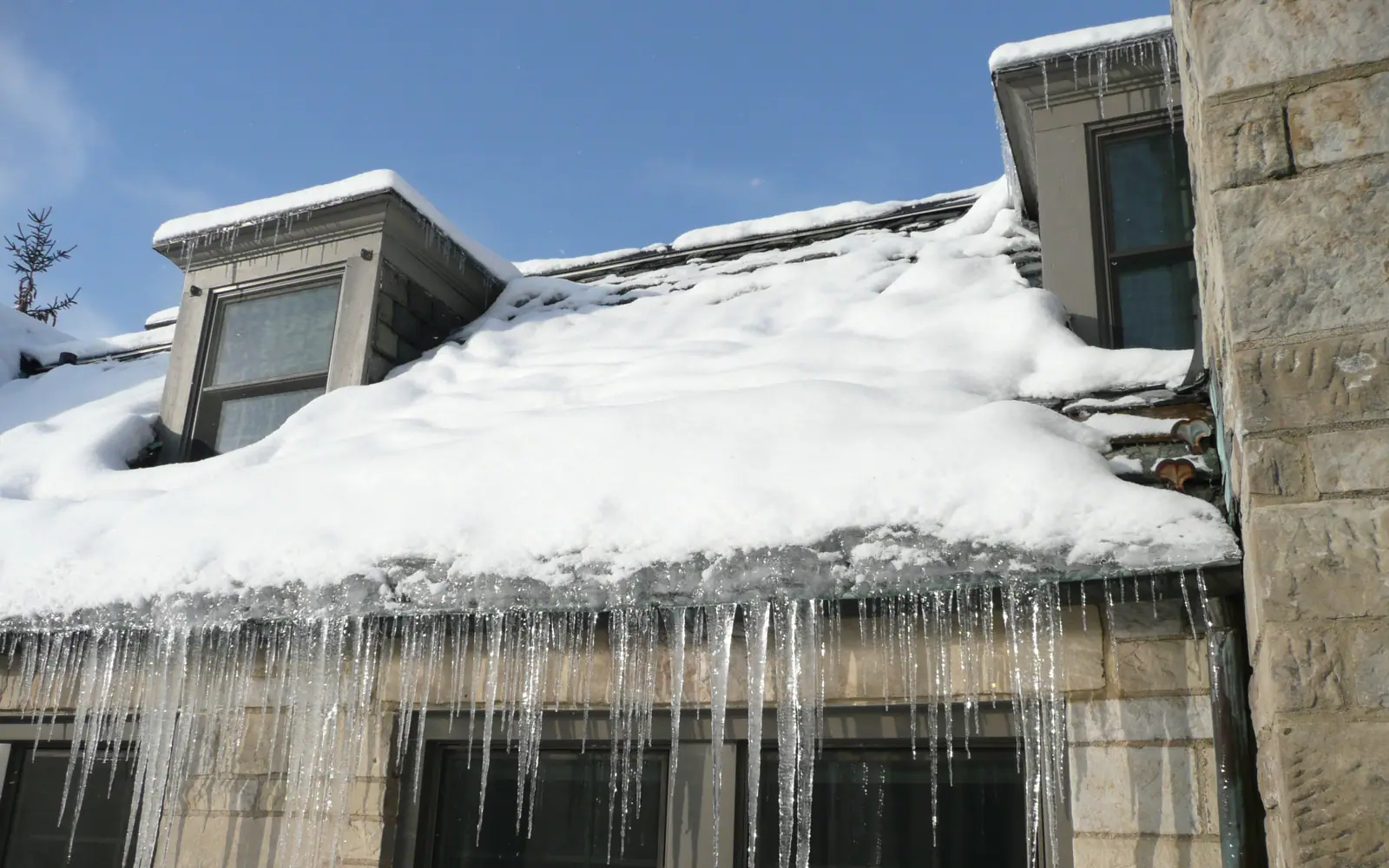
Mass Save’s sponsors offer no-cost home energy assessments, virtual or in person, for homeowners, renters and landlords. An energy specialist looks for savings, recommends upgrades and points you to rebates and 0% financing. Air sealing is where the winter payoff is. The heat that leaks into the attic is what melts snow on a roof edge, which is how ice dams start (more in our ice dam guide). Book before the cold weather fills the calendar.
3. Know your street’s parking rule
Eighteen of the 42 towns in our parking guide ban overnight street parking on a schedule, and the rest ban it once a snow emergency is declared. The rule changes at the town line, and sometimes by side of the street. Look up your town in Overnight Parking Bans: Rules for 42 Towns, and sign up for your town’s alert system, because bans are usually announced by phone, text or email.
4. Learn your sidewalk deadline
Boston gives you three hours after the snow stops, or three hours after sunrise if it fell overnight, to clear sidewalks and curb ramps, with a path at least 42 inches wide, according to the city’s rules. Other towns run from 6 to 24 hours or set no deadline; the list is in our sidewalk rules by town. Do not shove the driveway pile across the street, which some towns prohibit.
5. Check your town’s hydrant rule
Medford, for example, tells property owners to clear snow within 36 inches of any hydrant along their sidewalk, per the city’s snow page. Ask your DPW what your town expects, and dig out the nearest hydrant after each storm.
6. Save the outage numbers
Call your electric utility, not 911, to report an outage. Mass.gov’s power outage page lists Eversource East at (800) 592-2000. National Grid’s Massachusetts line is 1-800-465-1212. If you see a downed wire, stay clear and call 911. If your heat is at risk, our guide to winter heating help and shutoff protections covers the programs and phone numbers.
7. Pack one kit
The Red Cross recommends two kits: a go-kit with at least three days of supplies you can carry, including backup batteries and chargers, and a stay-at-home kit with at least two weeks of supplies. Set aside at least a gallon of drinking water per person per day. Know where you would go if the house gets too cold, such as a friend’s house, a library or a warming center.
8. Freeze-proofing and generators
For pipes, the Red Cross says to drain outdoor hoses, close the inside valves to outdoor faucets and leave the outside faucets open so any water left can expand. If you leave town, keep the heat on, no lower than 55 degrees F. To thaw a frozen pipe, keep the faucet open and use a heating pad, hair dryer or towels soaked in hot water, never a blowtorch or open flame.
The CPSC’s rule is to run a portable generator only outdoors, at least 20 feet from the house, with the exhaust pointed away from it. Never run one in a garage, even with the door open. If you want one wired into the house, hire a licensed electrician.
Get home guides like this by email
Winter prep, rebates and the practical chores, one useful guide at a time.
Free bonus when you join: the printable December plan. Unsubscribe in one click.
Sources
- Mass.gov: Massachusetts law about carbon monoxide detectors (Nicole's Law)mass.gov
- Mass Save: Home Energy Assessmentsmasssave.com
- City of Boston: Rules for clearing snowboston.gov
- City of Medford: Snowmedfordma.org
- Mass.gov: View and report power outagesmass.gov
- National Grid: Massachusetts contact numbersnationalgrid.com
- U.S. Consumer Product Safety Commission: Carbon Monoxide Information Centercpsc.gov
- American Red Cross: Winter storm safetyredcross.org
- American Red Cross: Frozen pipesredcross.org
Details such as dates, hours and prices come from the sources above and can change. Check with the organizer before you go.
How we report: every date, price and address comes from a linked source.