Ice Dams on New England Roofs: Causes, Fixes, What to Skip
Ice dams come from heat leaking into the attic. Start with a free Mass Save assessment, then air sealing, insulation and, in a storm, a steam crew.
If a brown stain has shown up on a bedroom ceiling after a thaw, the roof is probably not the problem. The house is leaking heat into the attic, and the ice dam along the eave is the symptom. The first step is to book a Mass Save assessment, which costs nothing.
Start with the Mass Save audit
The state’s ice dam fact sheet tells homeowners to schedule a home energy assessment to find the air sealing and insulation work that fixes the cause instead of the symptom. Mass Save’s sponsors offer no-cost virtual or in-person assessments, and the same program offers no-cost targeted air sealing. Ask the auditor to look at the attic floor first. Rebate amounts change, so get the current terms from Mass Save rather than from an older article.
How an ice dam forms
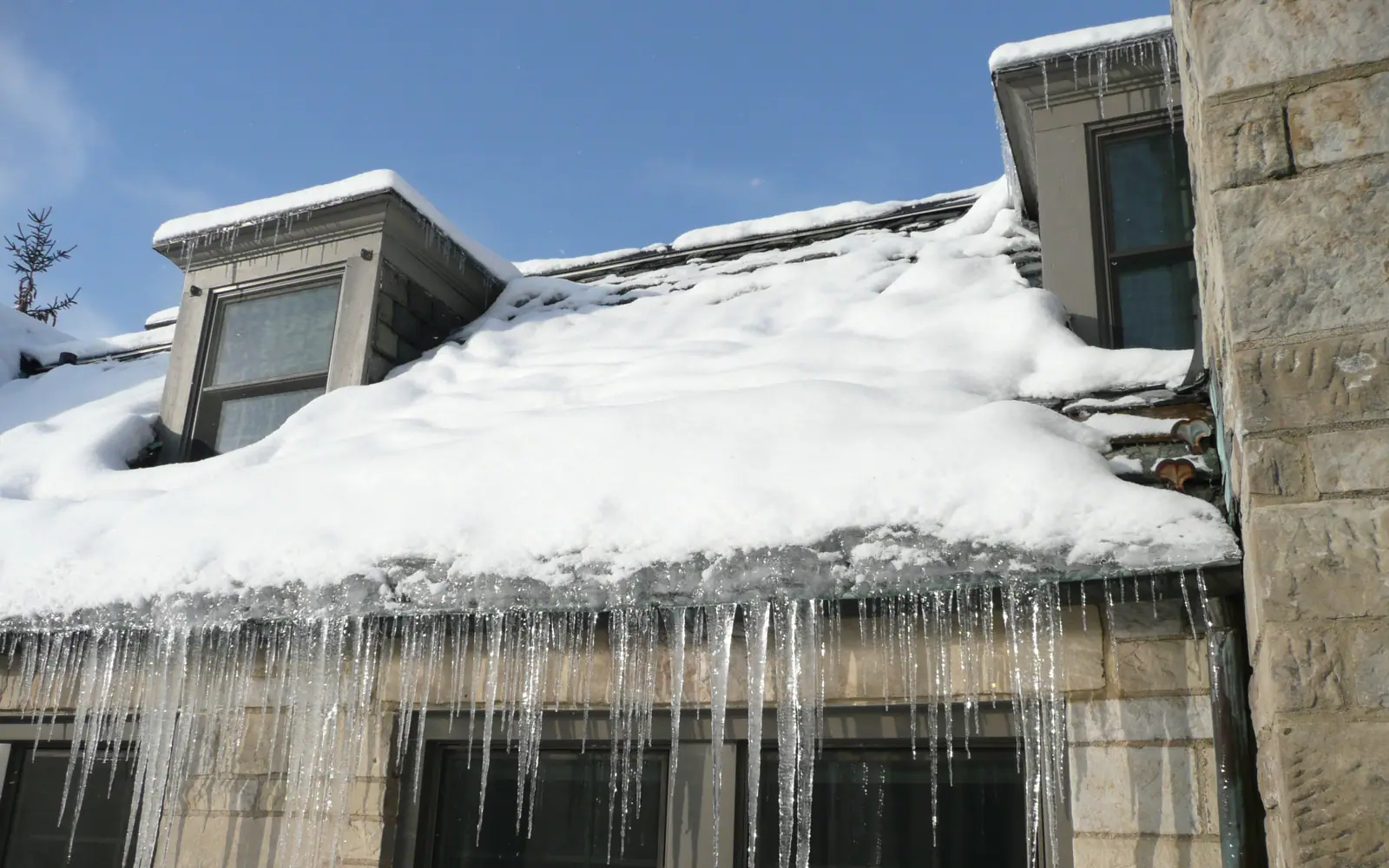
Three things have to be true at once, according to the state fact sheet: snow on the roof, outside temperatures below freezing, and a roof deck that is above freezing. Most dams start when heat from the living space leaks into the attic and warms the underside of the roof. Snow on the warm part melts and runs down to the overhang, which sits over nothing heated and stays as cold as the air. The water refreezes there, the ridge grows, and meltwater behind it backs up under the shingles and into the house.
That is why one side of a house can have a dam and the other not, or why a leaky bath fan can mark a stripe of roof. Sun, pitch, chimneys and complicated rooflines change the pattern, but the warm roof deck is the constant. Damage can include wet insulation, stained ceilings and walls, and the weight of ice on the overhang.
Signs one is forming
- A ridge of ice along the eave or gutter, with snow melting off higher up.
- Thick icicles at the edge.
- Water stains on ceilings or walls near exterior walls, damp insulation, or paint that peels after a thaw.
Fix the cause in the attic
In the order the state sheet and most energy auditors work:
- Air seal the attic floor. Gaps around recessed lights, the attic hatch, plumbing and wiring, and chimney chases are where heat gets in. Seal before adding insulation, since insulation slows heat but does not stop moving air.
- Add insulation on the attic floor so the ceiling below stays warm and the attic stays cold. Ask the auditor for the right depth for your house.
- Move heat sources out of the attic. The state sheet calls out ductwork and hot-water piping; if they cannot move, insulate them well.
- Vent bath fans and dryers outdoors, not into the attic.
- Add a waterproof membrane at the eaves when you reroof. The state sheet says the width depends on roof pitch, with steeper roofs needing less. A roofer in a 2017 Boston.com Q&A recommends rubberized underlayment 6 feet up the edge, in valleys and on low-pitch sections.
- Clean the gutters before snow so meltwater has a path.
If dams persist after air sealing and insulation, the state sheet suggests asking a building professional about attic ventilation as a last resort, because it is not right for every house.
Roof raking
A roof rake pulls snow off the lowest few feet of the roof from the ground. The Boston.com roofer says to clear the first 3 to 4 feet from the edge right after it snows, before a dam forms. Look up for power lines and skylights, use a rake with wheels or a plastic edge, and stay out of the path of the falling snow. If you have to rake after every storm, the attic still needs work.
If water is coming in
- Protect the inside first. Move belongings, set out buckets, photograph the damage for your insurer, and have an electrician look at any ceiling that bulges with water.
- Call a roofer who uses steam. The Boston.com roofer calls steam the safest removal method and says the crews book up early in a cold snap, so look for one in November.
- Stay off the roof. The state sheet says not to climb up or to chip at the ice from the ground, because both are dangerous and can wreck the roof.
Also skip power washers and hammers on the roof surface, and do not knock down icicles over a doorway. Cheap hardware-store heating cable manages the symptom at best, and the Boston.com roofer recommends it only as a last resort for hard-to-rake areas.
A November list
- Look at last winter’s stain spots on the ceiling.
- Clean the gutters and check that insulation is not blocking the soffit vents.
- Look at the attic floor on a cold day for frost on the underside of the roof.
- Find the roof rake.
- Book the Mass Save assessment, and a steam crew if you have had dams before.
Get home guides like this by email
Winter prep, rebates and the practical chores, one useful guide at a time.
Free bonus when you join: the printable December plan. Unsubscribe in one click.
Sources
- Mass.gov: Ice dam fact sheet (Department of Energy Resources)mass.gov
- Mass Save: Home Energy Assessmentsmasssave.com
- Boston.com: Know the ice dam (contractor Q&A, 2017)boston.com
Details such as dates, hours and prices come from the sources above and can change. Check with the organizer before you go.
How we report: every date, price and address comes from a linked source.